
Stretch factor 1.33X
Coverage 45 MM

Focus throw 100 0

minimum focus 3'3.4"1M

filter threads 77 MM

Weight 0.8lbs380g

size 2.0"5CM

get in on B&H
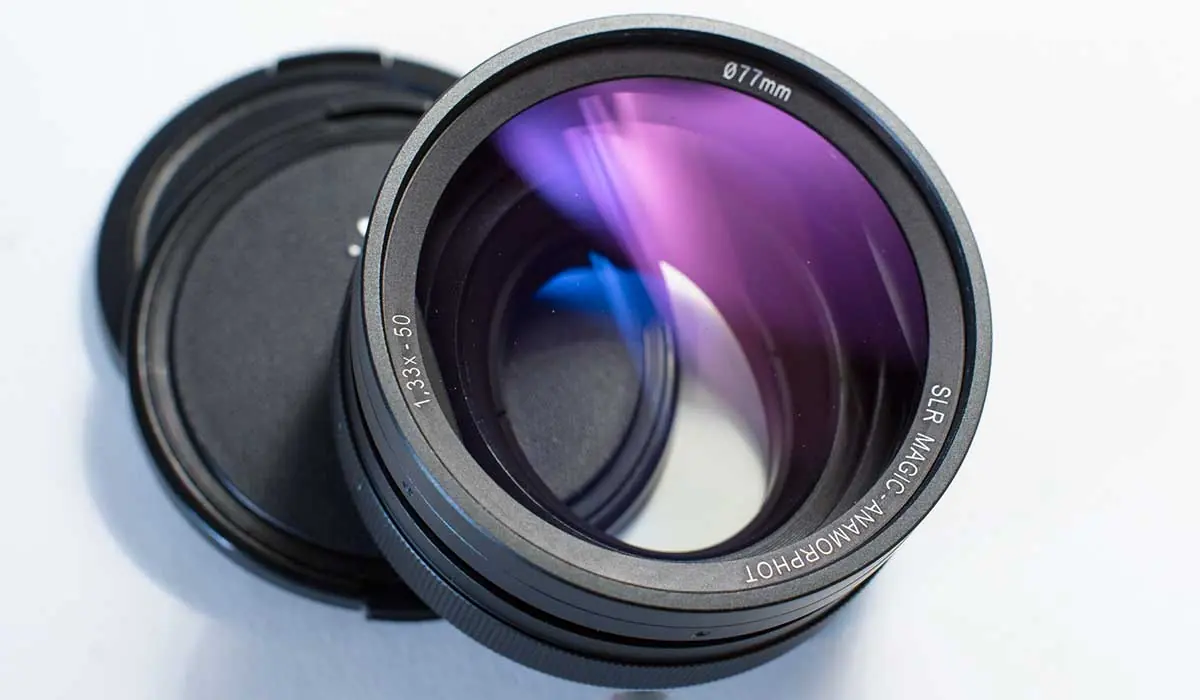
 Anamorphic Adapter by SLR Magic
 Double Focus
 Mount: 62 MM
As soon as SLR Magic’s first Anamorphot came out, I didn't see a point to it. It seemed like a double focus, oversized Century Optics adapter, for twice the price. Almost two years passed before I had the chance to actually see the lens with my own eyes and test it in person.
Andrew Chan from SLR Magic explained me th company’s guidelines are availability, affordability, reliability, serviceability and accessibility, so, instead of making a super expensive and ultra high quality lens in very small batches, they focus on having a product that anyone can use without special knowledge, that is easy to replace or fix in case of accidents and that can yield similar results over time - unlike most of the used vintage anamorphics where you can have like three Century adapters and each one has its own unique quirk. Knowing this made a huge difference in how I see their brand and I definitely believe they're partly responsible for the increased interest we're seeing in the anamorphic format these past few years.
The Anamorphot was first released in February 2014. I always thought the 50 in the name meant it could only go as wide as 50mm, but that is actually the diameter of the rear element - quite big, compared to other adapters, and that also leads to the information that this anamorphic works best with lenses with a front element smaller than 50mm. And it doesn't play so well with recessed front optics, such as the Helios 44.
Weighing 380g, it's not a heavy adapter. Focus is set between 3 to 4m and infinity, so if you're going for something closer than that, you'll have to play with the Near/Normal dial - which isn't hard. For alignment, the Anamorphot has been recently redesigned with a reverse lock ring, which makes the process quite simple and fast. Flares help fine tuning, but I got most of it right just by setting this white line straight up. I wish my other anamorphics had a similar mechanism for locking alignment. The rear has 62mm threads and the front threads are 77mm.
The Anamorphot works best with wide angles and not so fast apertures. The fastest aperture supported is f/2.8 and optimal performance is around f/5.6, but of course I had to try it at f/2 and such. Also, longer lenses make it struggle quite a bit. The Near/Normal ring is much less of a hassle than I expected. It moves the rear element back and forth, so the lens doesn't change size or rotate at all. This adapter is feels “double focus but not quite”.
From the lens’ manual: "The "sweet spot" can be found by defocusing the taking lens and observing the out of focus highlights "bokeh" on the subject. The resulting blurred highlights may be elongated horizontally or vertically. Adjust the SLR Magic Anamorphot 1,33x NORMAL / NEAR dial until the blurred highlights appear circular. Once the sweet spot is found, the final focus is achieved via the taking lens." This tip is valuable because it applies not only to this lens, but to any double focus system.
Edges are bad on the wider end - not as bad as Century's or Panasonic's - and it's easy to see how quality improves as the taking lens is stopped down.
If the Centuries had blue flares, the Anamorphot's flares almost clip the blue channel for how saturated they are. Extremely sci-fi and modern looking, I don't remember seeing such strong color in any other anamorphic flare so far. I did the flare test twice, first just the Anamorphot and then adding the Rangefinder so you can see how it affects the flares by basically adding two more round elements - also strong blue.
The Anamorphot wasn't designed to be full frame friendly but it works anyway. It should clear the frame for taking lenses 50mm and up, but the best combination I got with it was with Canon's 40mm f/2.8 pancake lens. The manual - which can be downloaded here - suggests some focal lengths according to sensor size, as you can see on this chart here. It didn't play well at all with the Mir 1B, just a bit wider at 37mm, since it has a much bigger front element and more recessed optics than the Canon's pancake.
Again, I did all the vignetting tests with just the Anamorphot and then added the Rangefinder so you can see how much "wideness" you lose in the process. Here we go from 40mm vignette free to 58mm with slightly dark corners.
The SLR Magic Anamorphot 1.33x-50 shares many similarities with the Century Optics WS-13, so handling it was quite simple. Alignment was easy to set, thanks to the reverse lock ring, flares come up very easily at even the faintest light sources and their strong blue can be distracting at times, drawing too much attention to the flares themselves than to the shot overall. For the daylight part, everything was very straightforward, using the Near/Normal dial was fine and the taking lenses slower apertures handled sharpness without a hitch.
When I moved to the dark shots, focus became harder to achieve and the diopters played an important role. The Near/Normal adjustments also become more noticeable due to the faster apertures. As for close up shots, the best approach would be to cap at 85mm and use diopters to get closer to the subject instead of going for a longer lens, since the Anamorphot doesn't handle it too well on full frame. Rack focusing was a little troubling sometimes, especially when entering the Near zone, which required a brief planning and rehearsing before actually rolling. Just emphasizing, most of my favorite shots in this test were result of the combination Anamorphot + Canon 40mm pancake. The 1.33x stretch out to Cinemascope is useful because it doesn't require much thinking, but ends up trumping the oval bokeh - which is better achievable through the use of diopters.
Readily available. V1 has a screw for alignment lock, V2, shipped as of late-2015 is locked through a reverse ring at the rear.
| Front Glass Size: | 65 MM |
| Rear Glass Size: | 50 MM |