
Stretch factor 2X
Coverage S35

Aperture T4.4

Focus throw 150 0

minimum focus 5'3.0"1.6M

filter threads N/A

Weight 5.1lbs2.3Kg

size 5.4"13.8CM

get in on eBay
 Anamorphic Lens by LOMO
 Single Focus : Synchro Focus
 Mount: PL
Weight including Foton zoom lens: 3.5kg
Length including Foton zoom lens: 25.6cm
Square size of glass in anamorphic block:
Front: 96.5x86mm
Rear: 53x43.5mm
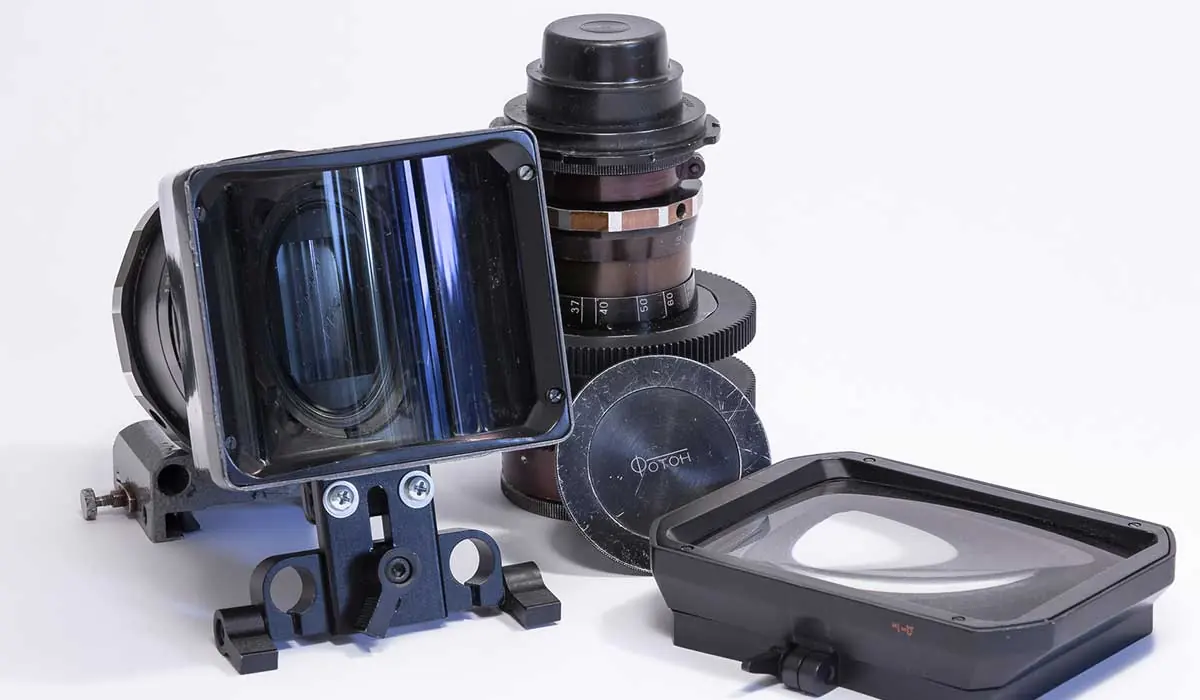
It's time to tell you all about the LOMO Foton-A. This is a cinema lens made in the Soviet Union. It's a long-range zoom, going from 37mm to 140mm, which allows you to shoot an entire show with just one lens. It's got a ton of character and texture, awesome blue flares (anamorphic zoom flares are something special). I've used it in such way more than once.
LOMOs are the top tier when it comes to Soviet lenses, and LOMO anamorphics are in a category of their own, with several different generations and price tags. I would say this is probably the cheapest anamorphic zoom in existence, and in terms of performance, it's more comparable to the first generation LOMO Squarefronts rather than the superior Roundfronts that came afterwards. As expected of a cinema lens, stretch is 2x, delivering stretched bokeh.
The first of the Foton-A's many downsides is its speed. With a slow aperture of f/3.5 (T/4.4), all the way down to f/16. You really can't do low-light or crazy shallow depth of field. It also features just eight aperture blades, which won't smooth bokeh when stopping down. This lens won't give you smooth ovals at any f-stop, just wide open. The second downside is its weight. This thing weighs 6kg or 13 pounds, which means it isn't a handheld friendly rig, requiring lots of support and even a sturdy tripod. It's true you can shoot an entire project with it, but moving it around is an intense process! The third downside is that the anamorphic and spherical blocks are not permanently connected - focus syncs through matching a pin on both pieces -, and that makes lens swaps super awkward. On the bright side, the whole setup doesn't extend while focusing or zooming and you don't need to realign it, ever.
The Foton originally comes in OCT-18 mount, which is a mount "inspired" by Arri Standard mount. Usually, OCT-18 lenses are a pain to convert and adapt, but the Foton features a mount-locking ring that allows you to easily swap mounts if you so desire. RAF Camera makes a few different ones and, in my case, I have both the EF and PL versions for it. Swapping them is a relatively simple process - especially when compared to usual mount changes that cost hundreds of dollars.
Focus comes down to 1.6m or 5ft. It's not really a great minimum focus distance. The only way you can get closer is with diopters.
If you're looking for resolution, this is not the lens for you. It's not really sharp wide open, and even when stopped down, things can still be mushy - especially at longer focal lengths. It's up to you to decide if it is sharp enough for your purposes. If I thought it was unusable, I wouldn't keep the lens.
The flares are outstanding. Thick, blocky, deep blue, they show up rather easily, even from light coming from the sides of the lens - as in "the source doesn't have to be in the frame". They're very sci-fi-ish, and that's one of my favorite aspects of this lens.
Vignetting is not really an issue. Designed for S35 film, you won't get full frame coverage - at 37mm you see the inside of the anamorphic block, at 140mm there's massive black edges.
I'm a big fan of the Foton-A. Maybe I'm just attached - the first copy I got had me jumping international hoops all the way from Brazil - or maybe it really adds layers of meaning to the cinematography of certain projects. I'm a fan of its low-contrast, low-sharpness look, I like how its distortion affects straight lines on the frame and the grittiness that all of its artifacts bring to the footage. It's much easier to use and mechanically reliable than most adapter setups, it doesn't require clamps, special support or a million step rings. It's a very convenient zoom, but still affected by a slow aperture, super heavy construction and poor minimum focus. When it comes down to practical use, I'd choose this lens over most adapters too, simply because it's practicality on set. No need to triple check focus, sync taking lens and anamorphic, or realign for every focal length change.
| Front Glass Size: | 97 MM |
| Rear Glass Size: | 53 MM |