
Stretch factor 1.42X
Coverage 40 MM

Focus throw 360 0

minimum focus 6'6.7"2M

filter threads 82 MM

Weight 1.7lbs750g

size 4.5"11.5CM

get in on eBay
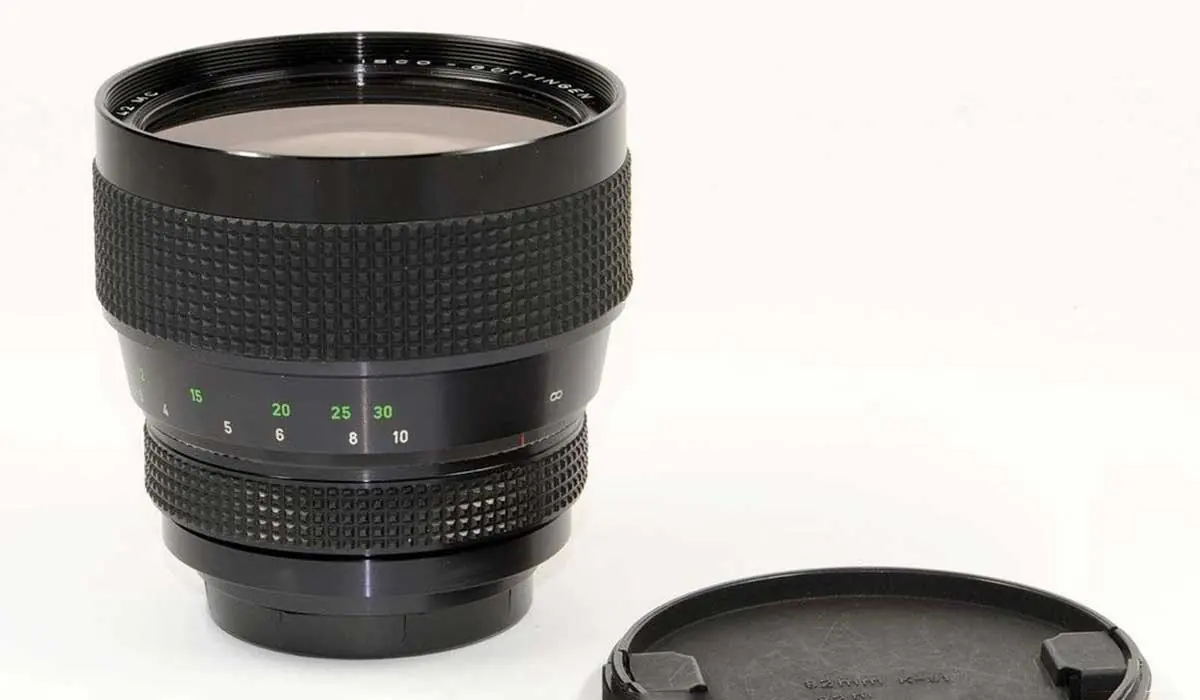
 Anamorphic Adapter by Isco Precision Optics GmbH
 Single Focus : Variable Diopter
 Mount: 62 MM
The middle member of the Iscorama family is also the hardest one to find. It was released in 1982, almost ten years after the Isco 36, being a pumped up version of the 36 without the massive size of the 54.
Due to its full-metal body, it weighs 750g, pretty close to the Isco 54. Focus is smooth as expected and the aligning mechanism isn’t as simple as the others. You have to pull a ring to the front of the lens and then spin the alignment. This has proven tricky since whenever I go past perfection, I have to spin it all the way again because going backwards is more likely to unscrew both lenses than to work properly.
No news about its single focus operation, based around a variable strength diopter. Set the taking lens to infinity and work solely on the Isco.
Like the other “numbered” Iscoramas, its name comes from the diameter of the rear glass element, 42 millimeters. Stretch is 1.5x and focus ranges from 2m to infinity, in about 200 degrees of throw. The rubber grip around the focus ring helps a great deal when working without a follow focus, compared to the other Iscoramas.
Front filter thread is standard 82mm, and a lot easier to find diopters. I’m able to step it down to 72mm without any vignetting on the Helios 44 (58mm). The rear thread is 67mm. There are clamps available, but you can get away just using step rings too.
This one produces better images than the 54, with less softness and friging on the edges. The Jupiter 9 stands out, almost begging to stay paired to the Isco 42 forever.
The Iscorama 42 is a multicoated lens. There are no other versions of it. Flares are even harder here than they were on the 54. Again, I tested it with the Helios 44 and with the Canon EF 50mm f/1.4, as a comparison, for we know how crazy a Helios can get.
When it comes to vignetting and widest possible taking lens, on full frame the Mir totally shows the adapter’s guts, forcing us to go longer. I believe 40mm is enough to achieve a 2.4:1 aspect ratio by cropping some of the sides, but if you want the entire 16:9 frame stretched to 2.66:1, you have to go with 50mm, and just barely. Using filters smaller than 82mm will introduce vignetting again.
For some strange reason I found much easier to tell when the subjects are in focus when filming with the Isco 42, even on the camera’s small screen. Feels way sharper than my other Iscoramas. Single focus, once again is the game changing ability featured by the Iscoramas. Its smaller form factor and reduced weight are also bonuses to run-and-gun capabilities and ‘blending’ as a regular lens.
Swapping diopters with this lens was a lot easier on the field and I was able to get any shot I wanted switching between the lenses and filters I have now. Thanks to multicoating – never thought I’d say this – I don’t have to worry about washed out highlights even on extreme settings like a blown-out sky or direct light shining inside the lens.
| Front Glass Size: | 80 MM |
| Rear Glass Size: | 42 MM |